

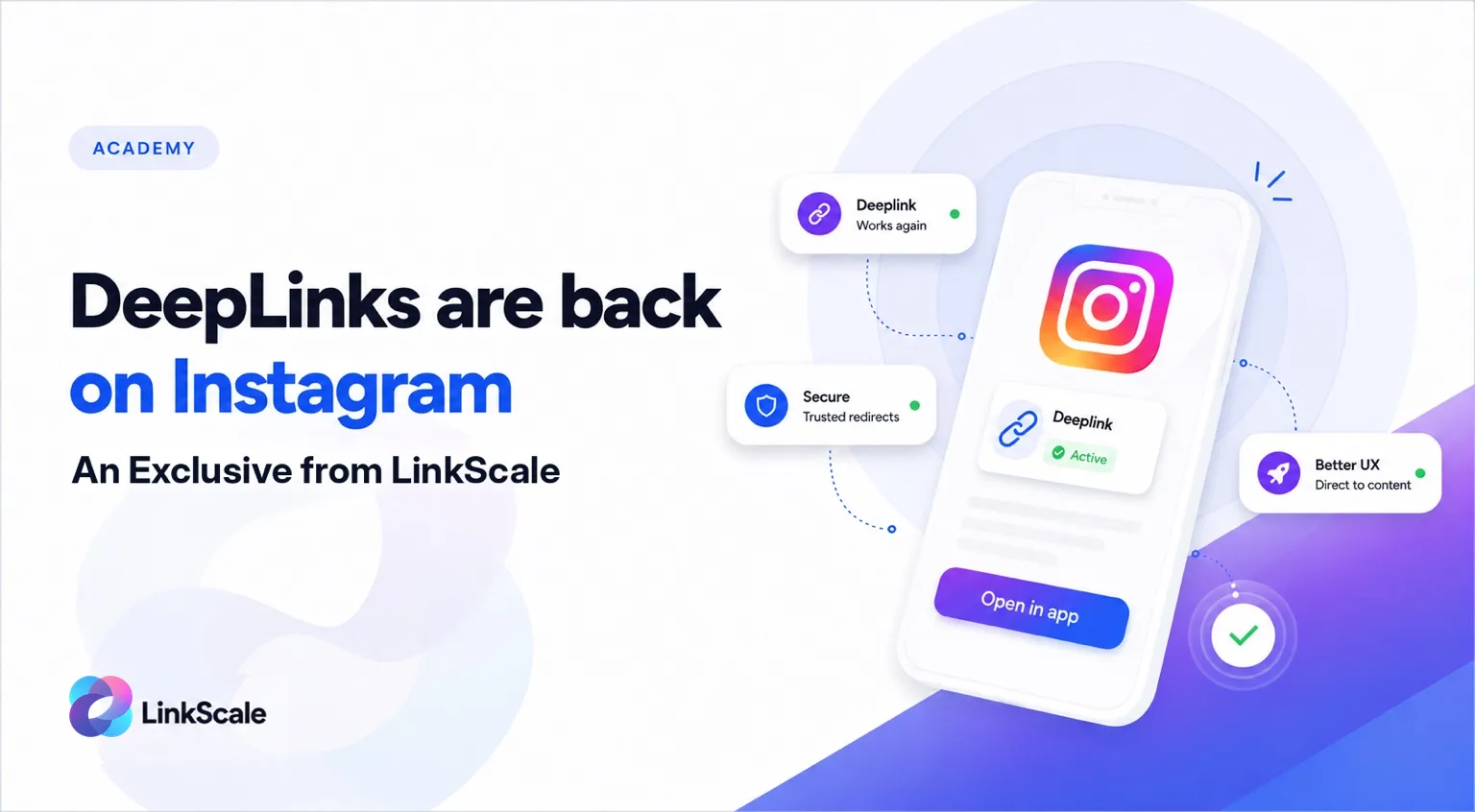
On 18 March 2026, Meta removed automatic deep links from Instagram. Links that used to hand the visitor off to their own browser started staying inside Instagram's in-app browser instead.
The change looks cosmetic and is not. The visitor who stays in the in-app browser is not signed in anywhere, and does not have their saved passwords or payment details. The destination did not change. The environment did, and the environment is where conversion happens.
Why losing the browser handoff costs conversions
The visitor arrives without their session
A browser carries state. Cookies, an active session, saved passwords, autofill, a stored payment method. An in-app browser carries almost none of that, because it does not share the session with the browser the visitor actually uses.
So a page that asks the visitor to be signed in produces a very different outcome depending on where it opened. Same page, same offer, same person, and the one who landed in the webview now has to log back in, retrieve a password, wait for a code by email, and sometimes verify their identity.
Most of them do not. They close the tab and mean to come back later.
What we measured
In a LinkScale study across several thousand Instagram accounts, links that handed the visitor off to their own browser reached 71% conversion on the destination platform, because the visitor arrives already signed in, with their passwords and payment details available.
That gap is the entire argument. It is not about the link being prettier. It is about whether the person on the other end has to start over.
What we rebuilt, and what it actually is
The first thing we shipped was the manual handoff, the three-dots path, which guides the visitor to open the link in their own browser themselves. It works, and it is a visitor-initiated action rather than anything happening behind their back.
We then found a route that restores a much closer approximation of the original behaviour for a large share of iPhone traffic. In practice, if the visitor has a browser installed alongside Safari, Chrome, Brave, Opera, Ecosia or another, the handoff can be reestablished.
This covers a large share of iPhone visitors. It does not cover everyone, and we are not going to pretend otherwise.
What we can and cannot tell you
This is the part worth reading carefully, because a lot of claims in this market do not survive contact with reality.
What we can say. The handoff is triggered by the visitor's own device behaviour and browser configuration. It does not disguise the destination, it does not misrepresent the link to anyone, and it does not depend on hiding anything from Instagram.
What we cannot say. No provider can guarantee how a platform will behave next month. Meta changed this once and can change it again, and anyone promising you a permanent answer is selling certainty they do not have. What we can commit to is shipping quickly when it moves, which is what happened here.
What does not work. Trying to publish a destination that a platform would refuse, by hiding it. That is a different problem with a different answer, and the answer is to fix the destination. We go into that distinction in what cloaking means in SEO and for links.