

Cloaking means showing one version of a page to a crawler and a different version to a human visitor. That is the whole definition, and it covers two very different practices that get confused constantly: a deceptive technique that Google penalises, and a routine filtering step that most large sites perform without anyone calling it cloaking.
Knowing which one you are doing matters, because one of them can cost you your search visibility and the other is how you keep bot traffic out of your numbers.
What is cloaking in SEO?
The definition Google uses
In search, cloaking means serving content to Googlebot that differs from what a person sees, in order to change how the page ranks. Showing a crawler a page stuffed with keywords while showing visitors a photo gallery is the textbook case.
This is a violation of Google's spam policies, and the penalty is removal from the index. It is not a grey area and there is no clever version of it that works long term.
Why people still try it
Because it appears to work for a few weeks. A page ranks for terms it does not deserve, traffic arrives, and then the site disappears from search results with no warning and no easy way back. The upside is temporary and the downside is permanent.
If you are optimising a page for search, the honest answer is that the crawler and the visitor should see the same thing.
Cloaking in link routing is a different problem
The word is also used for something unrelated to search rankings: deciding what an automated request receives when it hits a link, as opposed to what a real person receives.
Every link you publish on a social platform gets fetched by machines before, and often instead of, being fetched by people. Preview generators, security scanners, spam filters, monitoring services and scrapers all request the URL. Some identify themselves honestly. Many do not.
Why anyone filters at all
Three reasons, none of which have anything to do with search rankings.
Measurement. If a third of the requests hitting your link are automated, your click count is fiction and every decision you make from it is wrong. Separating machines from people is the difference between analytics and noise.
Preview control. When a link is shared, the preview is generated by a crawler that reads your page's metadata. Controlling what that crawler receives is how you control the preview card, which is a normal and expected part of publishing a link.
Protection against scraping. A link that resolves identically for everyone is trivially harvested at scale. Filtering automated requests is standard practice, and it is the same logic behind every rate limiter and bot-management product on the market.
Where the line is
Here is the distinction that matters, and it is worth being precise about it.
Filtering automated traffic to keep your analytics clean and your content from being scraped is ordinary infrastructure. Serving deceptive content to a platform's review systems in order to publish something that would otherwise be refused is a different thing, it breaks the platform's terms, and it puts the account at risk rather than protecting it.
We do not build for the second case and we would not recommend it. If a destination cannot pass a platform's review, the answer is to change the destination, not to hide it. That is a harder answer and it is the only one that survives contact with an enforcement team.
What LinkScale actually does
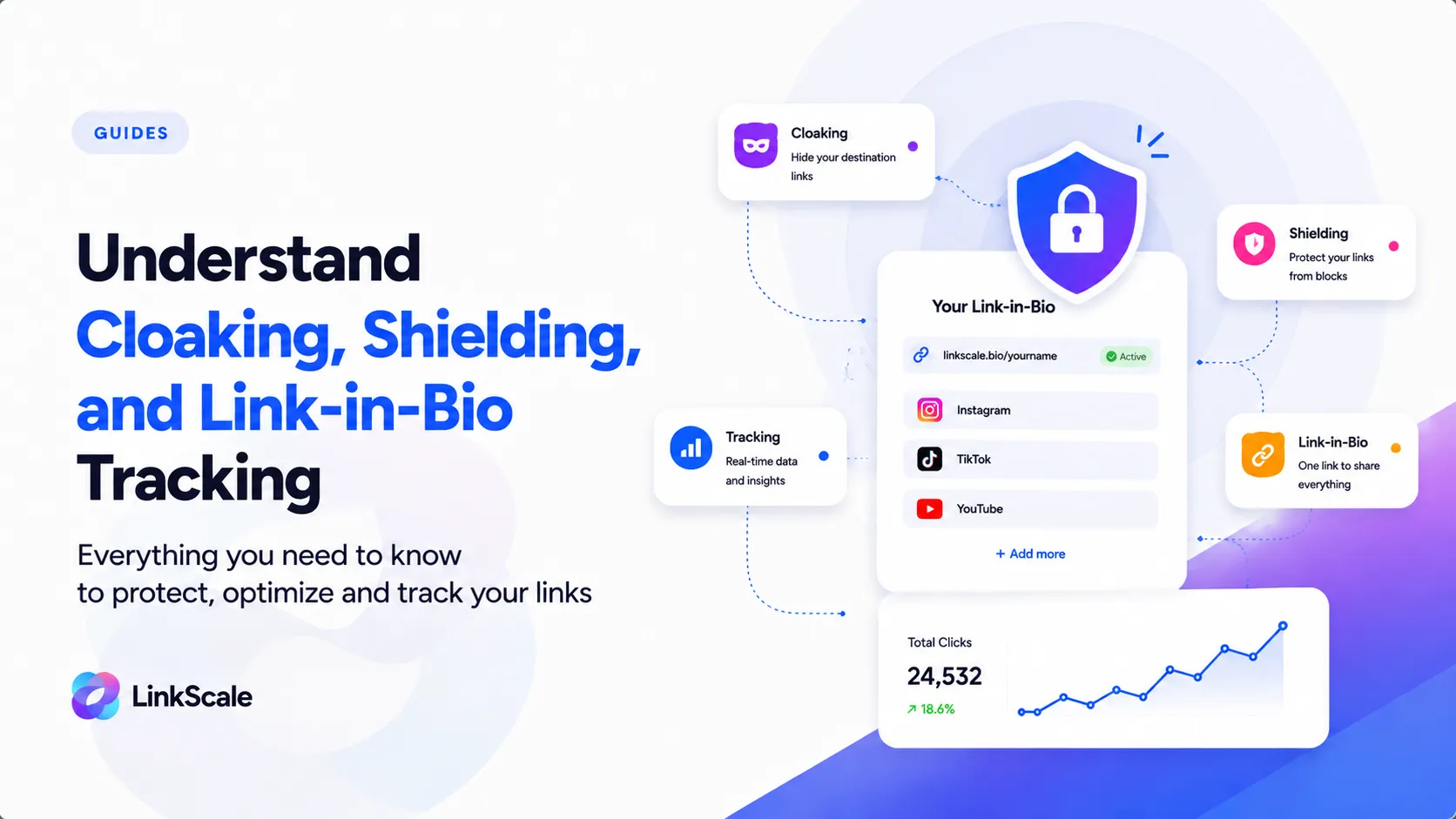
Our filtering layer is built for the first case: telling machines and people apart, and treating them differently.
| What arrives | What it gets | Why |
|---|---|---|
| A real visitor | Your page, and routing toward their own browser rather than an in-app webview | Fewer steps between them and your destination |
| A preview crawler | Clean metadata for the preview card | The link looks right when shared |
| A datacenter request, proxy or known scraper | A neutral response | It is not a visitor, and it should not be counted as one |
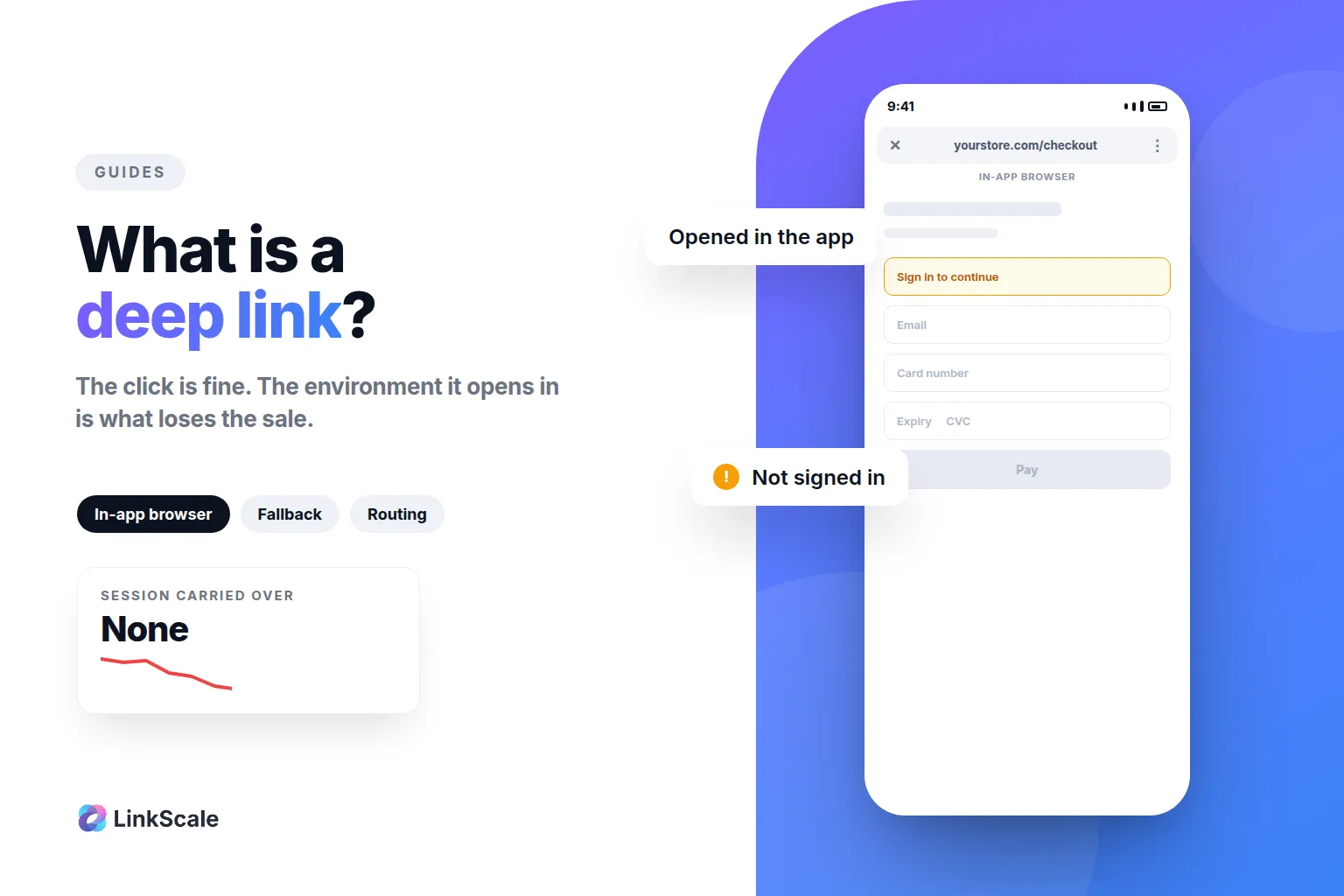
The routing part matters as much as the filtering. A visitor who lands in a social app's in-app browser is not signed in and does not have their saved payment details, which is why the same page converts differently depending on where it opens. We cover that mechanism in detail in what is a deep link.
Traffic quality is the useful output
The point of separating machines from people is not the separation itself, it is the number you get afterwards.
Once automated requests are excluded, your click count means something. You can compare platforms honestly, see which source sends people who actually arrive, and stop optimising campaigns against inflated figures. Our traffic quality page covers the signals we use, and analytics covers what you get to see.