A UGC creator is someone a brand pays to make content that looks like it came from a real customer: a testimonial, an unboxing, a quick demo filmed on a phone. The brand owns the video and runs it, usually as an ad, on its own account. You are paid for the content, not for your followers, which is why you can start with almost none.
That one difference changes everything else: how you get paid, what you sign, what goes in your portfolio, and why prices have started to fall. Here is how the job actually works in 2026.
What does a UGC creator actually do?
The work is short-form video, mostly 15 to 60 seconds, shot vertically, built to look native on TikTok, Instagram Reels and YouTube Shorts. The brand sends a product and a brief. You send back files.
Hook variations are the most underrated product on that list. An ad team tests openings, not whole videos, so a creator who delivers one body and five hooks is worth more than one who delivers five separate videos.
Who posts the video
In most UGC deals, nobody expects you to post anything on your own account. The brand downloads the files and publishes them, or runs them through its ad account. That is the real line between a UGC creator and an influencer.
UGC creator vs influencer: what is the difference?
Both make content for brands. What the brand is buying is completely different.
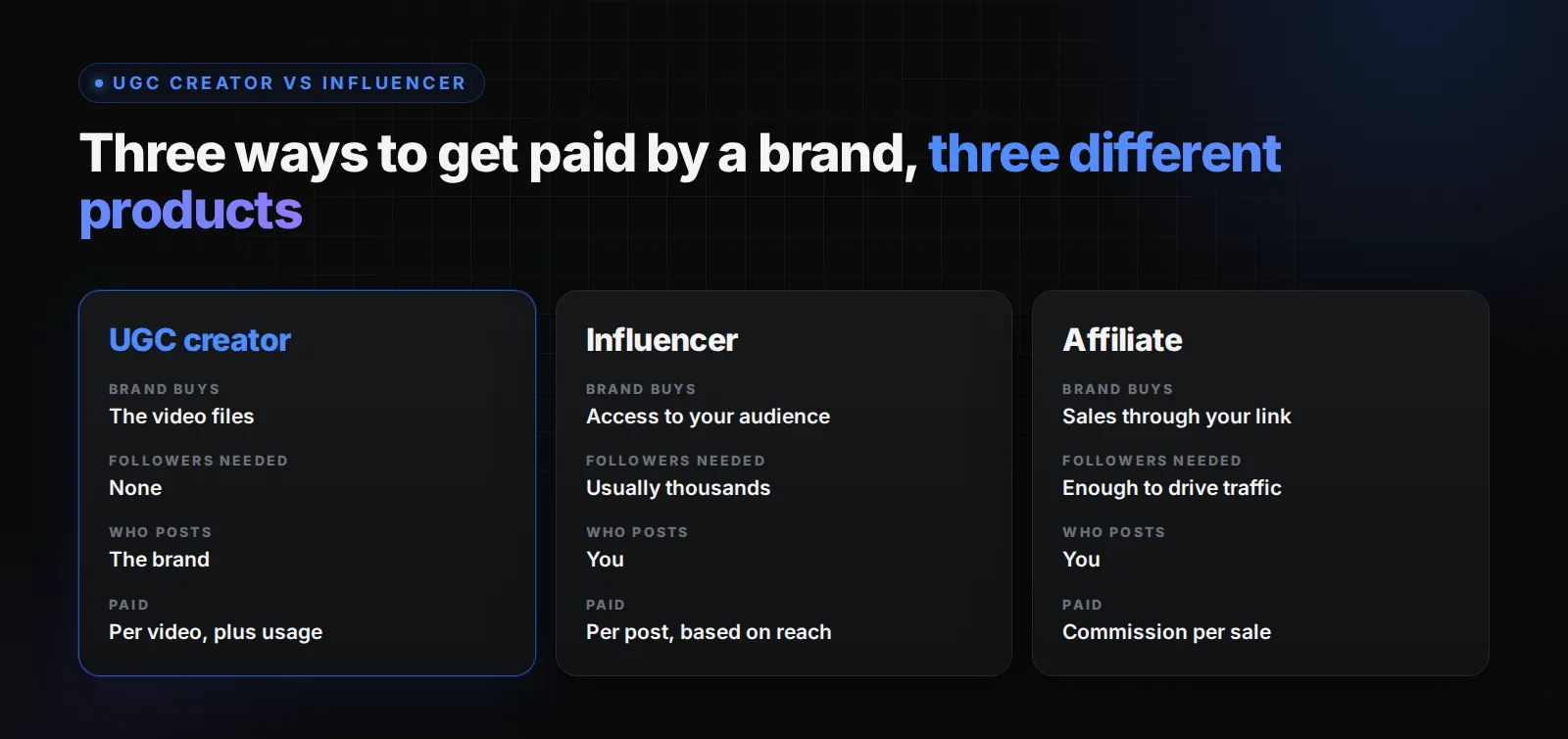
The cleanest way to remember it: an influencer rents out an audience, a UGC creator sells a production service. Plenty of creators do both, and the two price lists should never be mixed. An influencer post is priced on reach. A UGC video is priced on the work and on how the brand will use it.
How much do UGC creators make in 2026?
Less than the YouTube tutorials suggest. More than nothing, if you price the right things.
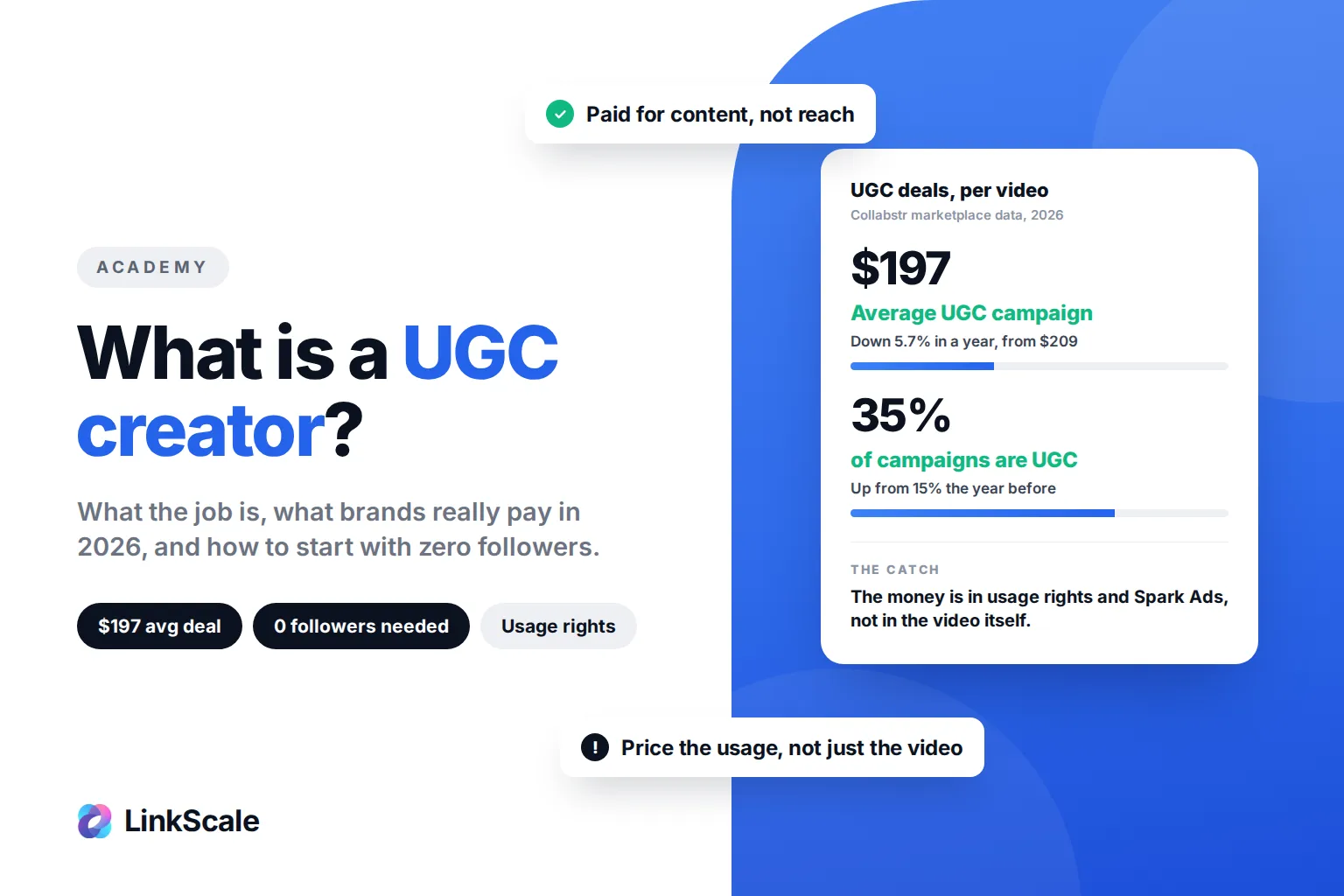
The average deal is under $200
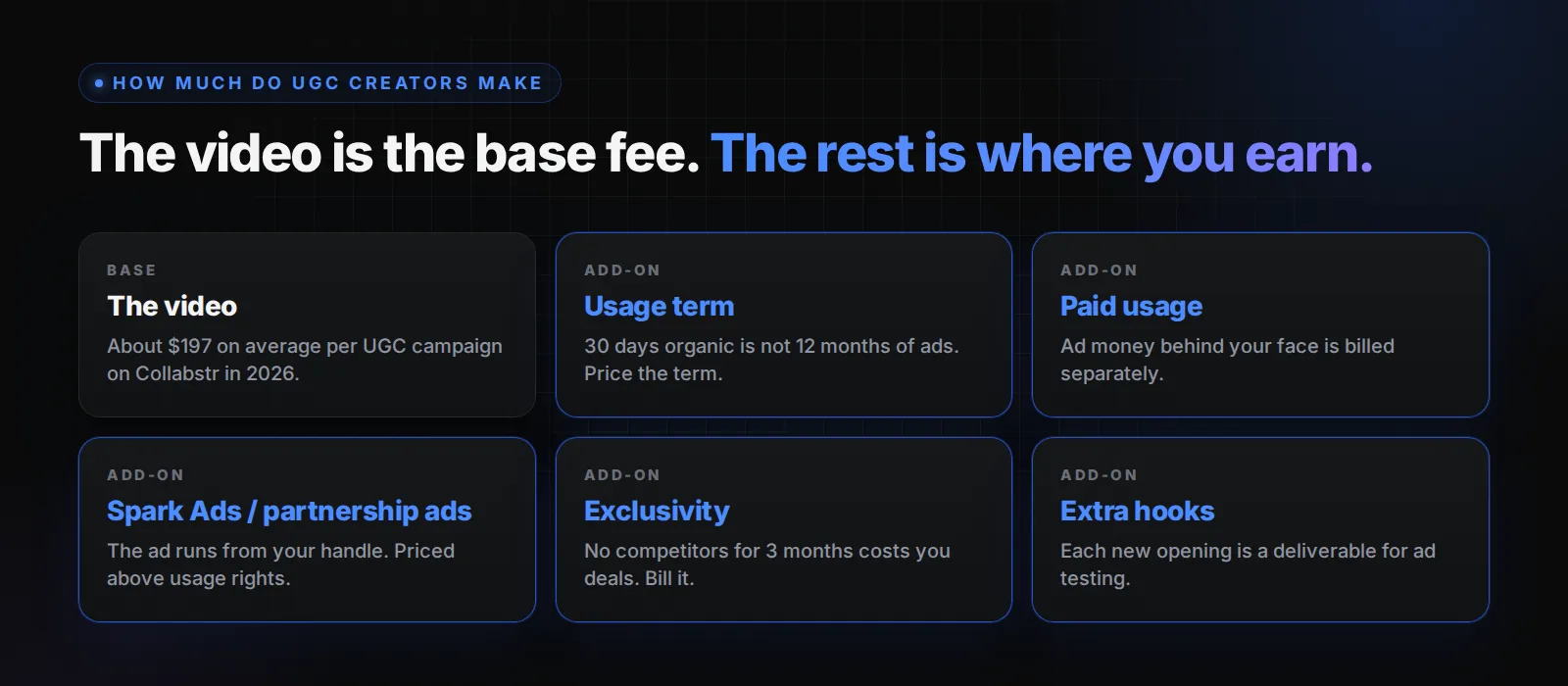
The most solid public numbers come from Collabstr, a creator marketplace that publishes its own transaction data. In its 2026 influencer marketing reportOpens in a new tab, built on more than 21,000 collaborations, the average UGC campaign fell from $209 to $197, a drop of 5.7% in a year, while the share of UGC campaigns on the platform more than doubled, from 15% to 35%. Nearly 80% of all brand collaborations there cost under $300.
More demand, lower prices. That is what a crowded market looks like.
The other credible data point is a survey. Influencer Marketing Hub asked more than 1,000 UGC creators about their income and found that the average was pulled up by a few high earners: the median annual earnings were $1,500, according to its UGC creator reportOpens in a new tab. Almost two thirds described themselves as part-time.
So treat any "$5,000 a month" thumbnail as the top of the distribution, not the middle.
What actually moves your price
The base fee pays for the video. The money is in everything around it:
- Usage term. Organic use for 30 days is not the same product as paid ads for 12 months. Price the term.
- Paid usage. If the brand will spend ad money behind your face, charge for it separately.
- Exclusivity. Not working with competitors for 3 months costs you income. Bill it.
- Raw files and extra hooks. Each hook variation is a deliverable.
- Revisions. Include one round. A second round is paid.
Never quote a single number for "a video" without saying what usage it includes. That is where most beginners give away the expensive part for free.
What are usage rights, whitelisting and Spark Ads?
These three terms decide how much a deal is really worth. Brands use them loosely. You should not.
Usage rights: what the brand can do with your video
Usage rights are the licence you grant: where the video can appear (organic posts, website, paid ads, TV), for how long, and in which countries. Write them into the contract. "Perpetual, all media, worldwide" is the most valuable licence you can sell, so it should be the most expensive line on your quote.
Spark Ads on TikTok
Spark Ads are TikTok's official way for a brand to run a creator's post as an ad. In TikTok's own definitionOpens in a new tab, the format lets advertisers publish ads "using organic posts made by other creators (with their authorization)". You post the video, generate an authorization code from the post's ad settings, and send the code to the brand. The ad then runs from your account, with your handle.
That last part is the point: the brand borrows your account's credibility, not just your footage, so it is priced above plain usage rights.
Partnership ads on Instagram, and "whitelisting"
Meta's equivalent is partnership ads, which "allow advertisers to run ads with creators", with both accounts shown in the ad's header, as Meta described them when it opened them up to developers in March 2025. Permission can be given post by post or for the whole account.
"Whitelisting" is industry slang for the same idea: a brand running ads through a creator's handle. It is not an official term on either platform. When a brand asks for whitelisting, ask exactly which permission, for how long, and with what spend.
How do you become a UGC creator?
You need a phone, decent light, and proof you can make a video that sells. Followers are optional.
Build 3 to 5 spec videos first
Pick products you already own and film the formats brands buy: one testimonial, one unboxing, one demo, and the same demo with three different hooks. Keep each under 45 seconds. Spec work is not optional, because no brand will pay for a first video they cannot see.
Choose a niche you can film every week
Skincare, kitchen gadgets, apps, pet products, fitness gear. A niche matters less for the algorithm than for logistics: you need products in that category and a setting that looks right for them. A bathroom shelf sells skincare. It does not sell protein powder.
Pitch where the briefs are
Creator marketplaces post open briefs, and TikTok runs its own brand and creator platform, TikTok One, for Spark Ads and campaigns. Direct pitching also works: find brands already running creator-style ads, and send them one relevant spec video, not your whole portfolio. Short email, one link, one price.
What should a UGC portfolio include, and where do you host it?
Your portfolio is the product page of your business. Most are built badly.
What goes in it
- 6 to 10 videos maximum, best first, grouped by format
- One line per video: product category, format, and what you delivered (for example "1 body, 4 hooks")
- Your rate card, or at least a "starting from" price and what usage it includes
- Turnaround time and how many revisions are included
- One clear way to contact you
Leave out vanity numbers. Brands do not care how many likes your spec video got on your account.
One link, not five
Your portfolio will be opened from a pitch email, a marketplace profile and your social bios, so write the bio line that points to it with the same care. Put it behind one short link you control, ideally on your own domain, so you can update the page without resending anything. If that link is tracked, you also learn which pitches got opened and which got ignored, which is the only feedback most brands will ever give you. That is the job LinkScale does for creators who sell from a single link. Our guide on the five things that actually differ between link in bio tools covers the alternatives.
Do UGC creators have to disclose ads?
If the video goes out on your account, yes. The US Federal Trade Commission's guide for influencersOpens in a new tab says to disclose any financial relationship with a brand, and that a disclosure in a video "should be in the video and not just in the description". It also rules out vague tags like "sp" or "collab".
Two rules matter even when the brand posts the video:
- You must have actually used the product. The same FTC guide says "You can't talk about your experience with a product you haven't tried."
- Fake testimonials are now explicitly banned. The FTC's 2024 rule on fake reviews covers testimonials from people who did not have real experience with the product, AI-generated ones included.
How the brand labels its own ads is the brand's responsibility. If you are unsure whether a specific deal is compliant, ask the brand in writing, or a lawyer. Do not guess.
Is being a UGC creator worth it in 2026?
As a side income, often yes. As a full-time job, only for the few who treat it like a production business.
The market is crowded. Collabstr's 2025 report found that 66% of the creators on its platform offer UGC services, and prices are drifting down. AI avatars are taking the cheapest end of the work, the generic "this changed my routine" clip.
What still pays is what an ad team cannot get from an avatar: real hands on a real product, hooks that test well, fast turnaround, and creators who understand performance. Creators who sell monthly retainers to a few brands and charge properly for usage and Spark Ads are the ones in the top of that distribution. If you want to compare UGC with being paid by the platform itself, our breakdown of how much TikTok pays per view puts the numbers side by side.
FAQ
Do you need followers to be a UGC creator?
No. Brands buy the video files and publish them on their own accounts, so your follower count does not matter. What matters is a portfolio of 3 to 5 spec videos that show you can film a testimonial, an unboxing and a demo that look native on TikTok and Reels.
How much should a beginner charge per UGC video?
The platform average on Collabstr was $197 in 2026, and most deals there are under $300. A beginner can start below that, but should always state what usage is included and charge extra for paid ads, longer terms, exclusivity and additional hooks.
Do UGC creators have to post the content on their own accounts?
Usually not. In a standard UGC deal, the brand downloads the files and posts or advertises them itself. The exception is Spark Ads or partnership ads, where the video runs from your handle, and that should be priced higher.
Is UGC the same as influencer marketing?
No. Influencer marketing pays for access to an audience. UGC pays for the content itself, which the brand owns under a licence and uses wherever the contract allows. The same person can do both, but the pricing logic is different.
Do UGC videos need an #ad disclosure?
If you post the video on your own account, yes, inside the video and not only in the caption, according to FTC guidance. If the brand runs it from its own account, labelling the ad is the brand's job. You must still have genuinely used the product.
Updated 5 October 2026. Written by the LinkScale team.